
If you are reading this guide, you want a clear, simple explanation of dental Implants and whether they might help you. This 500-word guide covers what dental Implants are, who may need them, how they work, risks, costs, and practical next steps to get evaluated.
What Are Dental Implants?
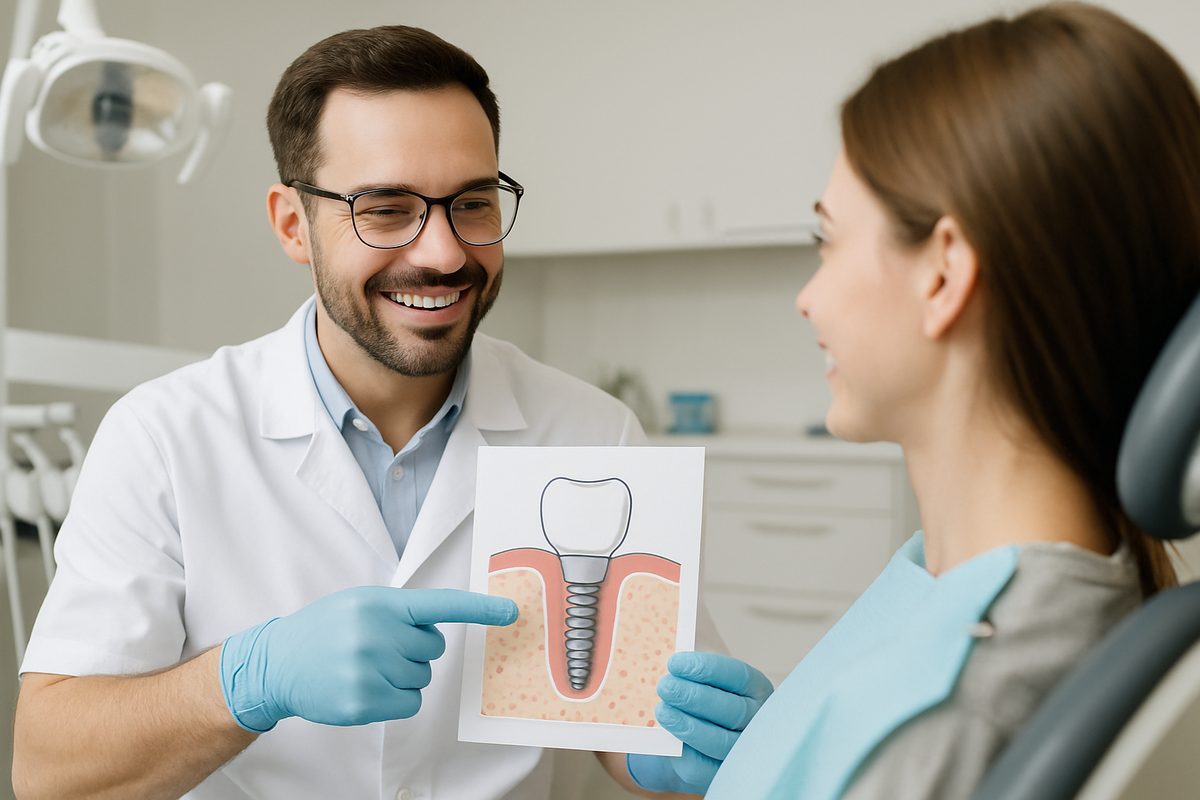
Dental Implants are metal posts (usually titanium) placed into the jaw to act like a tooth root. Three main parts make up an implant: the implant screw (root), the abutment (connector), and the crown (the visible tooth). The goal is to restore chewing, stop bone loss, and give a natural-looking tooth that functions like the real thing.
Who Is A Good Candidate For Dental Implants?
Good candidates often have one or more missing teeth, loose dentures, trouble chewing, or shifting teeth. Long-term tooth loss can change the jawbone, and Implants can help preserve bone. Some medical issues affect candidacy: smoking, uncontrolled diabetes, or certain immune problems increase risks. A dentist or implant specialist will evaluate your mouth, bone level, and overall health.
Types Of Dental Implants
Single-tooth implant
One implant and one crown replace a single missing tooth. This avoids altering nearby healthy teeth.
Implant-supported bridge
Several missing teeth are replaced by a bridge held by fewer implants, saving time and cost compared with one implant per tooth.
Full-arch solutions (All-on-4 / All-on-X)
These systems replace a full upper or lower row of teeth on a few implants for a stable, denture-like result.
What To Expect During The Process
Typical steps: consult and imaging (X-rays or CT), implant placement into the jaw, healing and osseointegration (weeks to months), and placement of the abutment and final crown or denture. Procedures use local anesthesia and sometimes sedation. Common side effects include swelling, mild pain, and bruising. Follow-up care and good oral hygiene speed recovery.
Benefits, Risks, And Success Rates
- Benefits: long-term stability, better chewing, bone preservation, and a natural look.
- Risks: infection, implant failure, nerve or sinus problems, and need for extra procedures like bone grafting.
Success rates for routine implants are typically above 90–95% when done by experienced teams and when patients follow care instructions. Smoking, poor oral hygiene, and certain health issues lower success rates.
Cost Factors And Financing
Costs rise with the number of dental Implants, need for bone grafts, CT scans, sedation, lab fees, and specialist fees. Dental insurance may cover part of the cost but often has limits. Many practices offer payment plans, and medical credit options are common.
How To Decide If Dental Implants Are Right For You
Ask your provider about experience, success rates, timelines, and alternatives like bridges or dentures. Consider getting a specialist consult or second opinion if you have complex needs or bone loss. Compare long-term costs and function, not just the upfront price.
Looking For Dental Implants?
If you think dental Implants could help, schedule an evaluation to review your oral health, imaging, and options. A personalized plan will outline treatment steps, timeline, and a cost estimate.
Quick FAQ
Are dental Implants painful? Most people report manageable pain controlled with medication; placement uses anesthesia.
How long do they last? With good care, implants can last decades or a lifetime.
How do I care for them? Brush, floss, and get regular dental checkups; avoid heavy smoking.
Is there an age limit? No strict age limit — health and bone quality matter more than age.