
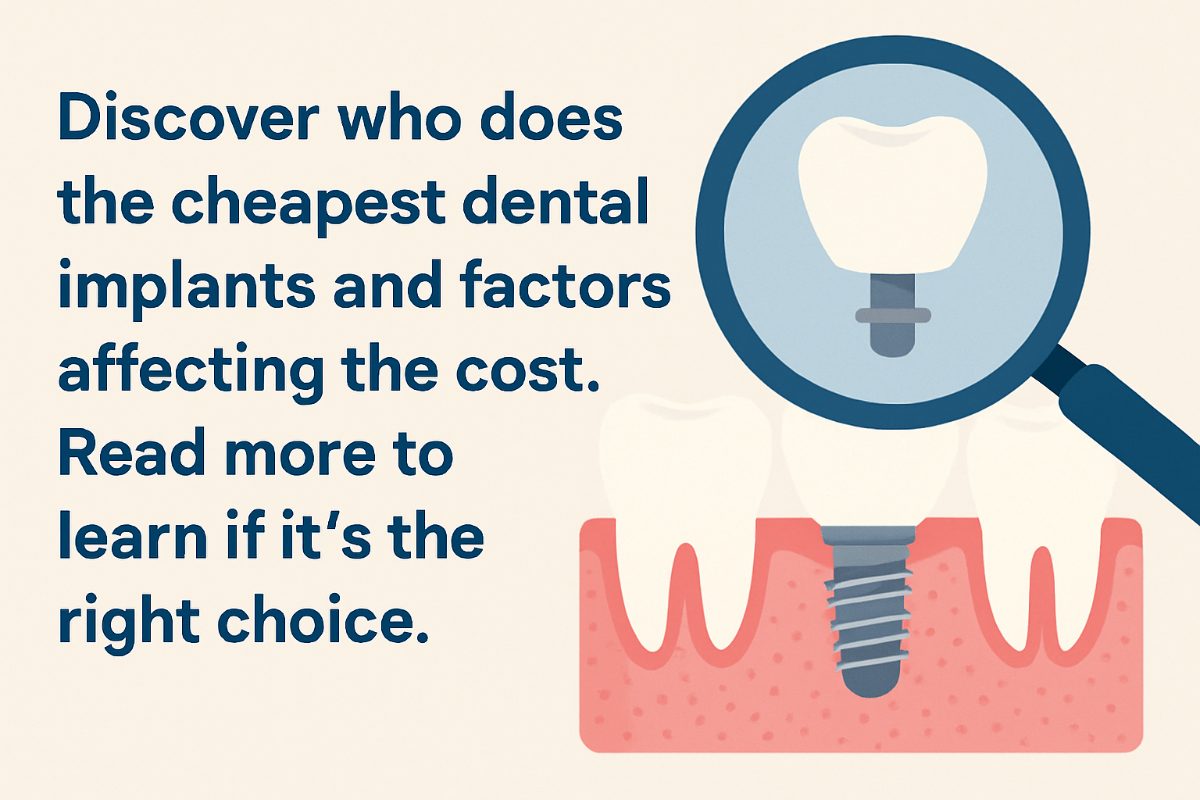
Who does the cheapest dental implants is tempting — this post explains what “cheapest” really means and what to check before you choose. Read on to learn cost drivers, common ad tricks, risks, and practical next steps to find an affordable but safe option.
Why dental implant prices vary
Prices can differ a lot because several parts of treatment add cost. Major drivers include implant parts, lab work, bone grafts, imaging, and the provider’s experience level.
Implant components and lab fees
Not all implants or abutments are the same. Brand-name implants and custom lab-made crowns cost more than generic parts. Lab fees for crowns, bridges, or full-arch prosthetics are a big portion of the bill.
Procedure complexity (one tooth vs full-arch)
Replacing one tooth is much cheaper than full-arch work. Full-arch or all-on-4 procedures require more time, more materials, and complex lab work, so the total cost rises accordingly.
Provider training and overhead
Specialists with advanced training and surgical experience charge more. Higher rent, staff costs, and technology like 3D imaging also raise fees—but they can improve outcomes and reduce complications.
How “who does the cheapest dental implants” ads can be misleading
Ads that promise rock-bottom prices often show a starting number that leaves out key steps. The headline price may not include consultation, imaging, temporary teeth, grafts, or follow-up visits.
Common exclusions to watch for
- Initial exam, 3D scans, or surgical guides
- Bone grafting and extractions
- Temporary restorations or final lab crowns
Discount chains vs private practices
Discount chains may lower prices by using less-experienced staff, lower-cost materials, or limited post-op care. Private practices often include more comprehensive planning and follow-up, which can prevent costly problems later.
Material quality and warranty fine print
Cheap offers may use low-cost materials with weaker warranties. Read warranty terms: some cover only parts, not the clinical work, and may require expensive conditions to keep the warranty valid.
Risks and long-term costs of choosing the cheapest option
Choosing the cheapest route can cost more over time. Failures, infections, and poor-fitting prosthetics lead to repeat surgeries, more time off work, and higher lifetime expense.
Higher failure and revision rates
Poor technique or low-quality parts can increase the chance an implant fails and needs removal and replacement—doubling or tripling your cost.
Hidden repeat procedures and added bills
Problems often mean extra imaging, emergency visits, new lab work, and more chair time. Those add up fast compared with a higher-quality initial treatment.
How to find affordable but safe dental implants — questions and next steps
Use this checklist to compare providers and protect yourself from surprise costs:
- Ask for a written total estimate that includes all steps: exams, scans, surgery, materials, lab work, and follow-ups.
- Request the implant brand and type of crown or prosthesis used.
- Ask how many implant cases the doctor has completed and their complication rate.
- Check warranty details: what’s covered and for how long.
- Request before-and-after photos of similar cases and read verified patient reviews.
Financing, insurance, and payment-plan options
Many offices offer financing or monthly plans to spread cost. Check if your insurance covers part of the crown or other steps. Ask for interest rates and total repayment amounts before signing.
Get a second opinion and read verified reviews
A second consult can reveal alternative plans or missing steps in a cheap quote. Verified reviews and case photos help confirm a provider’s quality and consistency.
If you want a clear cost breakdown and options, contact the office for a consult and a written estimate.