
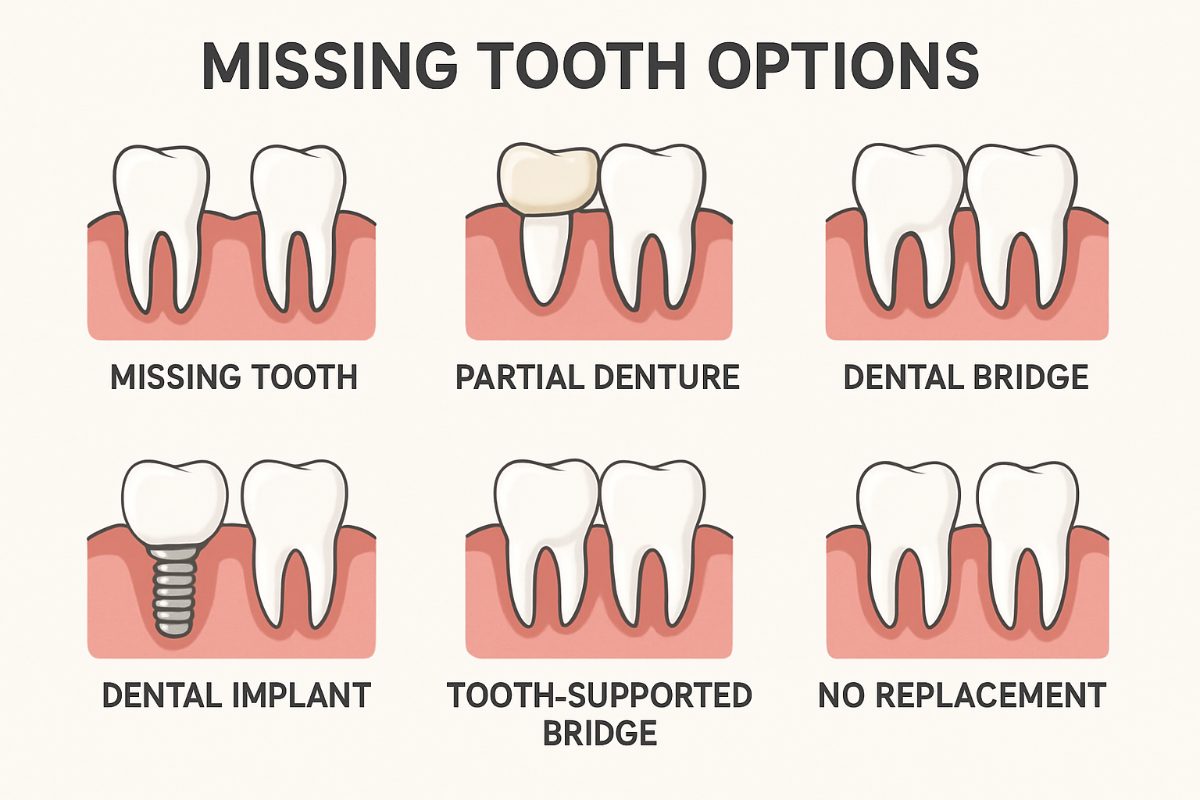
This short 2024 guide covers your missing tooth options and helps you compare choices so you can decide what to do next. You’ll learn why treating a missing tooth matters, the main options available, how to choose between them, and the practical next steps to get care.
Why You Should Treat A Missing Tooth
Leaving a gap may seem fine at first, but missing teeth can cause long-term problems. The bone where the tooth was can shrink, nearby teeth can tilt or shift, and your bite can change. These changes can lead to pain, chewing problems, and changes in speech.
Treating a missing tooth early can prevent bigger issues, like needing more complex dental work later. Even one missing tooth can affect overall oral health and comfort, so it’s worth reviewing your options soon.
Overview Of Missing Tooth Options
Removable: Partial Dentures
Partial dentures are removable appliances that replace one or more missing teeth. They usually take a few weeks to make and fit. You wear them during the day and remove them to clean.
Pros: Lower upfront cost, noninvasive, easy to adjust or replace. Cons: Can feel bulky, may need regular maintenance, and can affect speech or chewing compared with fixed options.
Fixed: Dental Bridges
A dental bridge fills the gap by using crowns on the teeth next to the missing tooth. A false tooth (pontic) sits between those crowns. Bridges usually take a couple of visits and are fixed in place.
Pros: Stable, fast to deliver, looks natural. Cons: Requires altering healthy adjacent teeth, may need replacement every 5–15 years, and doesn’t stop bone loss at the missing site.
Dental Implants
Dental implants replace the tooth root with a titanium post placed in the jaw, then a crown is attached after healing. The basic steps are implant placement, healing (osseointegration), and crown placement. Some cases allow a temporary tooth on the same day.
Pros: Preserves bone, feels and functions like a natural tooth, long-lasting when cared for. Cons: Higher cost, requires surgery, and some patients need a bone graft or longer healing time.
When No Treatment Might Be OK
In some low-risk situations, monitoring the gap is reasonable. This may apply when the missing tooth is not needed for chewing, nearby teeth are stable, and the patient prefers to avoid treatment. Still, regular exams are important to catch any changes early.
How To Choose Between Missing Tooth Options
Pick the option that fits your oral health, budget, timeline, and goals. Consider these key factors:
- Overall oral health and gum disease control
- Bone availability at the extraction site
- Budget and long-term cost vs. upfront cost
- How quickly you need a tooth replaced
- Cosmetic goals and how natural you want it to look
- Medical conditions or medications that affect healing
Ask your dentist questions like:
- What are the pros and cons for my specific mouth?
- Will I need a bone graft or additional surgery?
- How long will this last and what maintenance is required?
- Can you show before-and-after cases like mine?
Seek a specialist—an oral surgeon or implant dentist—if implants are likely or if you have complex bone or medical issues.
Next Steps And Finding Care
A typical first visit includes a clinical exam, X-rays or a CBCT scan if needed, discussion of options, and a treatment plan with a cost estimate. You’ll also talk about timelines and financing or payment plans if needed.
Our practice offers experience with implants, bridges, and denture options and can guide you through pros and cons for your situation. To move forward, schedule a consultation to get a personalized plan and next steps for your missing tooth options.
Ready to decide? Call to book an exam and review your options with a dental professional.